The Rage Nobody Warned Me About: Parenting, Overload, and Repair
Aug 31, 2026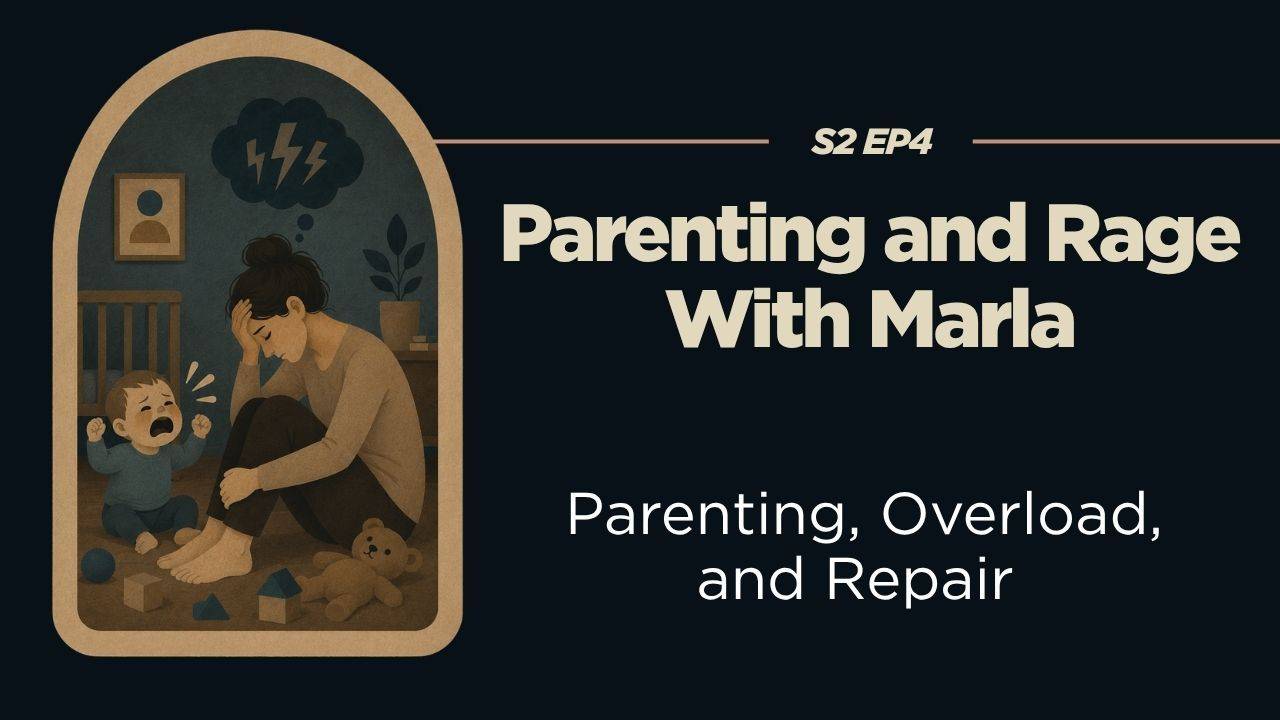
Podcast Companion Article for Love Your Villain – Season 2, Episode 4
When Anger Is the Smoke, Not the Fire
There is a kind of rage that can arrive in parenting without warning. It can show up when the baby will not stop crying, when two children are fighting, when somebody laughs as you are trying to be taken seriously, or when you are asked for one more thing after you have already given everything.
In episode 4, season 2, of Love Your Villain, “Parenting and Rage”, I spoke with my friend Marla about “mom rage”, the shadow side of motherhood, and what happens when a parent becomes the feeding machine, soothing machine, sleep machine, emotional anchor, and household manager all at once.
The rage is real. But often, it is not the whole story. Underneath it may be exhaustion, isolation, grief, fear, hunger, resentment, sensory overload, or the unbearable experience of being responsible for everyone while no one is caring for you.
Meet the Villain in the Shadow
When I ask Marla whether she has a villainous side, she describes it as her shadow: the anger and fierceness she was taught to hide. She grew up learning to be polite, to avoid making other people uncomfortable, and to turn difficult feelings inward.
That lesson is familiar to many women. Anger in men is often treated as power; anger in women is frequently treated as a character flaw. So the villain does not disappear. She goes underground. She becomes anxiety, avoidance, simmering resentment, or a body carrying more stress it was never meant to hold alone.
So in this episode we get curious about what the “Shadow Villain” is protecting and explore what these deep seated emotions are before they have a chance to scream.
When One Parent Becomes the Entire Nervous System
Marla’s first baby wanted to be held, nursed, and soothed constantly. Her partner’s anxiety made it difficult for him to become a calming presence, so the baby repeatedly came back to her. For two years, she became the person responsible for feeding and sleeping, day shift and night shift, with almost no chance to fully rest.
This is one reason parental rage cannot be reduced to “manage your emotions better.” Regulation is harder when a person is chronically sleep-deprived, underfed, touched out, isolated, and carrying an unequal share of care. You cannot keep drawing calm from an empty account. Eventually the overdraft fee is fury.
Marla offers new parents an important piece of advice: give the other parent time to build their own soothing relationship with the baby. Their way may look different. That does not make it wrong. A child benefits from more than one safe harbour, and the primary parent needs somewhere to rest.
A Baby’s Cry Is Communication, Not an Accusation
Before becoming parents, many of us hear a crying child and wonder why the adult cannot “control” them. Then parenting rearranges the entire scene. A baby is not filing a formal complaint about your competence. Crying is one of the few languages available to them.
That does not make the sound easy to tolerate. Marla remembers seeing a mother walking with headphones while her child screamed in a stroller and thinking, “Good for you.” The mother had placed the child somewhere safe, gone outside, and found a way to reduce her own sensory overload while continuing to care for them.
Sometimes responsible parenting looks tender and photogenic. Sometimes it looks like putting the baby safely in the crib, stepping into another room, and taking a pause that prevents a dangerous reaction. A parent who recognizes their limit is not abandoning the child; they are interrupting the escalation.
If you are afraid you may hurt yourself, your child, or someone else, seek immediate help. In British Columbia, call 9-1-1 in an emergency or 8-1-1 for health guidance. Persistent rage, anxiety, numbness, depression, or frightening thoughts deserve professional support, not shame.
Parents Need a Safe Harbour Too
In episode 4, Marla describes watching a father sit calmly with a crying toddler. He did not rush to silence the child or become anxious about the feeling. He created a safe container until the toddler could move through the distress and return to him.
The scene brought Marla to tears because she had wanted to offer that steadiness to her own children, yet no one was offering it to her. She was expected to be the harbour while living through the storm.
Caregivers can provide responsive, emotionally available care more consistently when they are supported themselves. That is not indulgence; it is part of the child’s environment. The real question is not only, “Why is this mother so angry?” It is also, “Who is making sure she eats, sleeps, showers, recovers, and has another adult to call?”
Do Not Ask an Empty Person to Manage Your Help
When someone is depleted, “Let me know if you need anything” can become one more task. They have to identify the need, decide whether it is reasonable, contact you, coordinate the details, and risk feeling like a burden.
Marla’s advice is refreshingly practical: just do something. Bring food. Drop off groceries. Hold the baby while the parent showers. Take the older child to the park. Wash the dishes without requiring a committee meeting about the sponge.
Support works best when it is specific and easy to accept:
- “I’m bringing dinner at 5:30. Would pasta or soup be better?”
- “I can take the kids outside for an hour on Saturday. Does morning or afternoon help more?”
- “I’m at the grocery store. Send me five items, or I can choose the basics.”
- “I can sit with the baby while you sleep. You do not need to entertain me.”
The village does not have to be picturesque. It just has to show up.
Repair Matters More Than Perfect Calm
Marla is honest about moments when anger frightened her. She also describes what she tried to do differently from the adults who raised her: take responsibility, explain when her response was out of proportion, apologize, and reconnect.
One day, her son asked, “Mom, why are you so angry? Everything is so much worse when you’re angry.” It stopped her in her tracks. Rather than punishing him for naming the truth, she listened.
Children do not need a parent who never feels anger. That person does not exist and, frankly, sounds suspiciously like a robot with excellent snacks. Children need adults who can recognize harm, own their feelings, restore safety, and show that relationships can survive difficult moments.
Repair might sound like:
- “I was overwhelmed, but it was not okay for me to speak to you that way.”
- “You did not cause all of the anger you saw.”
- “I need a few minutes to calm my body, and then I will come back.”
- “The boundary still matters, but my reaction was too big.”
- “I am sorry. Let’s try again.”
An apology does not erase a boundary. It separates the boundary from the parent’s unprocessed emotion.
Giving Children What We Were Not Given
Parenting can reopen old wounds in strange and vivid ways. Marla remembers laughing when her baby had an explosive diaper and then feeling a visceral flash that she might have been scolded for the same thing as a child—as though an infant could choose not to make a mess.
By responding to her son with humour instead of shame, she was caring for him and revisiting something in herself. She now teaches her daughter that it is not her job to make other people comfortable simply by shrinking, silencing herself, or overriding her instincts.
This is one of the quiet possibilities in parenting: we can give children permission to feel anger, ask for privacy, name unfairness, and be imperfect. In doing so, we may begin to offer our younger selves the same permission.
It Is Never Really About the Spoon
Every parent eventually meets the wrong-spoon crisis: the toddler collapses because lunch arrived with the blue spoon instead of the red one. The temptation is to treat the spoon as a referendum on discipline, obedience, and whether this child will someday have a job.
But often, it is not about the spoon. A young nervous system needed a release, and the spoon happened to be standing nearby when the weather arrived.
Adults do this too. The shoes in the hallway, the dishes in the sink, or the sibling laughter may be the immediate trigger, but the intensity may belong to three sleepless nights, loneliness, an absent partner, financial stress, or years of being told not to express anger.
The trigger still matters. So does what is underneath it.
Reflection Questions
As you reflect on this episode, consider:
- What messages did you receive about anger when you were growing up?
- Does your anger move outward, turn inward, or disappear until it erupts?
- Which practical conditions make you more reactive: hunger, noise, touch, sleep loss, isolation, or unequal labour?
- When your anger feels bigger than the moment, what might it be protecting?
- Who helps regulate the person responsible for regulating everyone else?
- What would repair look like after a moment you wish you had handled differently?
- What specific form of support could you offer a depleted parent without asking them to manage you?
Mom rage is not proof that a mother is bad. It is information. Sometimes it points to an emotion that needs expression. Sometimes it points to a nervous system that needs rest. And very often, it points to a family that was never meant to do all of this alone.
Listen to the Full Episode
In Season 2, Episode 4 of Love Your Villain, “Parenting and Rage”, I talk with Marla about the rage nobody warned us about: suppressed anger, anxious and avoidant villains, sleep deprivation, single motherhood, unequal caregiving, sibling conflict, emotional repair, re-parenting ourselves, and why every parent needs a village.
Listen to Love Your Villain on Apple Podcasts or Spotify.
Further Exploration
If this conversation resonated with you, these resources offer practical support and deeper context.
Books
- Good Moms Have Scary Thoughts — Karen Kleiman and Molly McIntyre
- Burnout — Emily Nagoski and Amelia Nagoski
- The Book You Wish Your Parents Had Read — Philippa Perry
Parental Mental Health and Support
- Mom Rage: Causes, Ways to Cope, and Reasons for Hope — Postpartum Support International
- Postpartum Rage Support Group — Postpartum Support International
- Mental Health During and After Pregnancy — Public Health Agency of Canada
- Managing Postpartum Depression — HealthLink BC
- Pacific Post Partum Support Society — peer support for parents and families in British Columbia
Parenting and Emotional Development
- A Guide to Serve and Return — Center on the Developing Child at Harvard University
- Never Shake a Baby — HealthLink BC
Topics
- Mom rage, postpartum anger, and parental overload
- Perinatal mental health and caregiver support
- Serve-and-return relationships and emotional regulation
- Postpartum support in British Columbia
Take The Love Your Villain Course
ILA’S STORY