Whoops, I'm Pregnant: Responsibility, Choice, and the Reality of Unplanned Pregnancy
Aug 13, 2026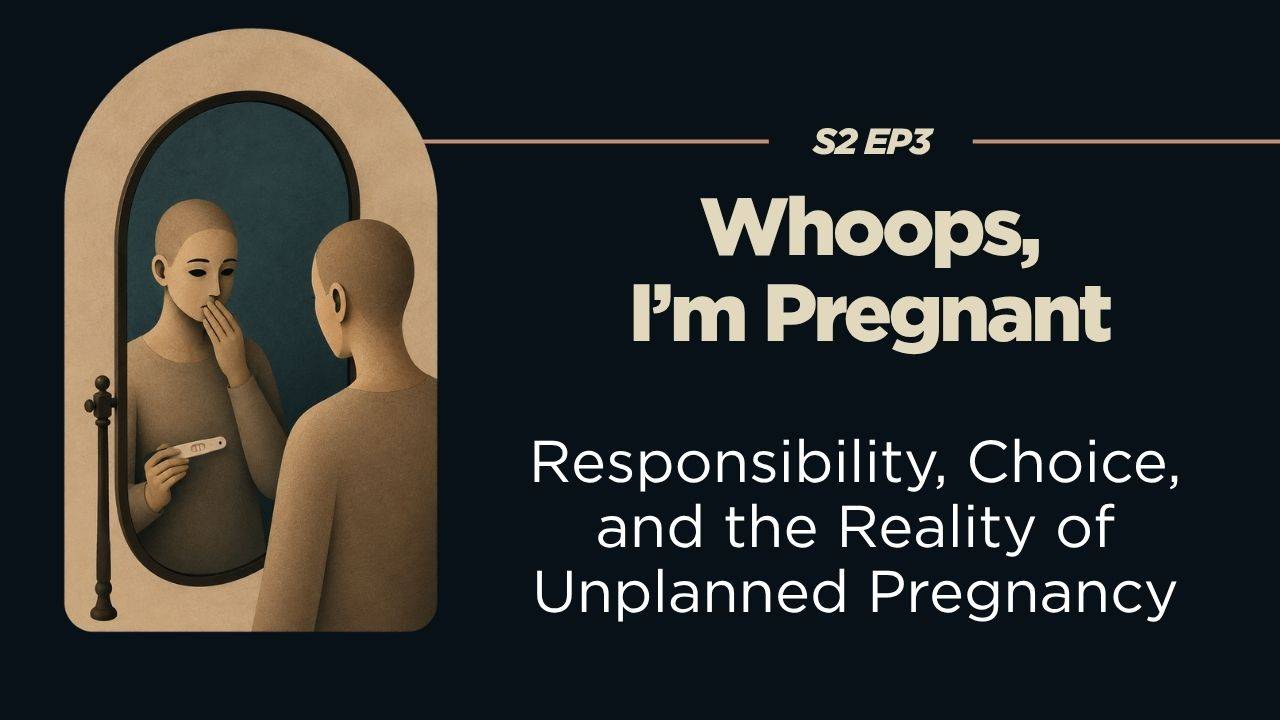
Podcast Companion Article for Love Your Villain – Season 2, Episode 3
When “Whoops” Becomes a Life-Changing Decision
When I say, “Whoops, I’m pregnant,” I know those words can sound casual. But there is nothing casual about what follows. A pregnancy can change your body, your relationship, your future, and the life of a child who had no part in the choices that brought them here.
In this episode of Love Your Villain, I speak very directly about unintended pregnancy, abortion, contraception, sexual responsibility, relationship fantasy, and the difference between truly wanting a baby and wanting a relationship to survive.
At the centre of this conversation is a difficult question I believe we have to ask: when a pregnancy is unplanned, are we prepared to make a decision based on reality rather than fear or fantasy?
A Decision at Fifteen
This episode is grounded in a deeply personal part of my story. At fifteen, after relying on misunderstood information about fertility and having sex without a condom, I became pregnant. I knew immediately that I did not want to continue the pregnancy.
My decision was shaped by more than my age. I could already imagine the resentment, instability, and intergenerational trauma that might follow if I became a parent before I had the emotional and practical capacity to care for a child. I refused to become the statistic other people expected me to be.
My boyfriend wanted a different outcome. I dismissed his feelings and made him powerless in the decision. Looking back, I can acknowledge that I was cruel in the way I handled his emotions. But I do not regret claiming authority over my own body, and I do not regret the decision I made.
I can hold two truths at once: another person may have very real feelings about a pregnancy, and the pregnant person still carries the physical risk and the final decision.
Choice Is Not the Same as Carelessness
I use some of my sharpest language when I talk about sexual irresponsibility. I am not saying that anyone facing an unintended pregnancy deserves punishment. I am saying that responsibility begins before the pregnancy test, using accurate education, honest conversations, contraception, consent, and respect for what each person will do if contraception fails.
I believe a humane response to an unplanned pregnancy has to make room for complexity. Continuing a pregnancy, choosing adoption, and having an abortion can each carry emotional, physical, relational, and practical consequences. No slogan can make that decision on someone else’s behalf.
I believe safe abortion is health care, and access to timely, accurate, non-judgmental information matters. So does the freedom to continue a pregnancy without coercion. To me, real choice means support in every direction, not pressure dressed up as morality.
Pregnancy Does Not Repair a Relationship
One of the strongest warnings I want to offer is this: a baby cannot secure a fragile relationship. Pregnancy may create a permanent connection between two people, but connection is not the same as commitment, compatibility, safety, or love.
When your relationship is new, uncertain, or already unequal, pregnancy can intensify every unresolved issue. The practical demands of parenting, such as sleep deprivation, money, caregiving, household labour, changing bodies, and reduced autonomy, do not magically create trust. They expose whether that trust was there in the first place.
I also want to challenge the fantasy that having a baby “for the relationship” protects anyone. If your true hope is that a child will make a reluctant partner stay, that child may eventually become the container for disappointment and resentment that belongs between the adults.
I believe a child deserves to be welcomed as a person, not recruited as relationship glue.
Shared Prevention, Unequal Consequences
I believe pregnancy prevention is a shared responsibility, but I know its consequences are not distributed equally. The person who becomes pregnant carries the immediate physical effects and has to navigate the available options. That imbalance is why I believe communication before sex is essential.
I am asking both partners to take ownership of their bodies:
- Discuss contraception before sex, not in the middle of it.
- Use condoms correctly and consistently when pregnancy or STI exposure is possible.
- Do not assume a partner is using hormonal contraception.
- Do not remove a condom, ejaculate inside someone, or change the agreed conditions without explicit consent.
- Know what emergency contraception can and cannot do.
- Talk honestly about what each person would want if pregnancy occurred.
To me, responsibility is not merely avoiding an outcome. It means refusing to make another person absorb the consequences of a decision they did not agree to.
Fertility Awareness Needs More Than a Calendar
My pregnancy followed a familiar myth: I believed that counting a set number of days before or after my period made unprotected sex safe. Fertility is not that tidy. Ovulation can vary, and sperm can remain capable of fertilization for several days after sex.
Fertility calendar methods can work for some people, but they require education, daily tracking, and careful use. They also do not protect against sexually transmitted infections.
I do not blame my fifteen-year-old self for failing to know everything. What I learned is that partial information can feel like confidence while still leaving you exposed. Accurate sexual education is harm reduction.
Condoms Are Care, Not an Insult
I am blunt about condoms because the stakes are real. Correct condom use can reduce the risk of pregnancy and many sexually transmitted infections, although no barrier method eliminates every risk.
I do not see asking for a condom as rejection, and agreeing to use one is not a favour. It is a basic act of shared care. If a partner prioritizes sensation over your health, consent, and future, I believe they are revealing something important about their readiness for sex.
This responsibility belongs to everyone. No one should be pressured into sex without the protection they want, and no one should assume another person will manage contraception on their behalf.
Emergency Contraception Is Not Abortion
I also share an experience in the episode of using emergency contraception after a partner ejaculated inside me without permission or discussion. That experience showed me why prevention cannot be outsourced: even when emergency contraception is available, the person taking it carries the cost, uncertainty, possible side effects, and emotional labour.
Emergency contraception works to prevent pregnancy after unprotected sex; it does not end an established pregnancy. Options and timing vary, so prompt advice from a pharmacist, clinic, or health-care professional is important before use.
For listeners in British Columbia, HealthLink BC provides current information about emergency contraception, pregnancy options, abortion services, and confidential support lines.
When the Decision Is Yours
My abortion story is not a universal answer. It is the story of knowing what I could and could not offer a child at that point in my life. In the years that followed, I did substantial work around trauma, addiction, relationships, and my professional identity before I felt ready for parenthood.
My life did not unfold as I had planned. By the time I wanted a child, pregnancy was no longer available to me in the way I had hoped. Even so, I do not reinterpret my teenage decision as a mistake. The grief I carry about one loss does not create regret about an earlier choice.
That distinction matters deeply to me…and it may matter for you too. I can grieve for the family I did not have and still know that continuing a different pregnancy, at a different time in my life, would not have been right.
Preparing for Parenthood Before Pregnancy
This brings me back to the larger theme of Season 2: parenting begins before birth. I do not believe readiness means perfection, wealth, or a trauma-free past. It means being willing to look honestly at what a child would be entering.
Before you decide to parent, I invite you to ask:
- Is this relationship safe, respectful, and capable of repair?
- Can we discuss money, caregiving, sex, family boundaries, and conflict without intimidation?
- Do I want to raise a child, or am I hoping a child will give me identity, purpose, or commitment?
- What unresolved trauma might become louder under stress and sleep deprivation?
- Who will provide practical and emotional support when the fantasy gives way to daily life?
- Can I accept that a child will become their own person rather than fulfil my expectations?
I do not believe these questions can guarantee an easy family life. But I do believe they make it more likely that the decision is conscious.
Reflection Questions
As you reflect on this episode, consider:
- What did your sexual education teach you, and what important information did it leave out?
- How comfortable are you discussing contraception, consent, and pregnancy before sex?
- Have you ever confused being wanted, being needed, and being committed to?
- What beliefs do you carry about abortion, and where did those beliefs come from?
- What would emotional, relational, and practical readiness for parenthood look like to you?
- How can partners share responsibility before pregnancy while respecting bodily autonomy afterward?
I know an unplanned pregnancy may begin with a mistake. I believe what follows deserves honesty, informed choice, and compassion…not fantasy, coercion, or shame.
Listen to the Full Episode
In Season 2, Episode 3 of Love Your Villain, I examine unintended pregnancy through my own experience of becoming pregnant at fifteen, choosing abortion, navigating my partner’s disagreement, and later confronting the complicated distance between becoming ready for parenthood and being able to conceive.
Listen to Love Your Villain, Season 2, Episode 3, “Whoops, I’m Pregnant” on Apple Podcasts or Spotify.
Further Exploration
If my story or this conversation resonated with you, I have gathered these resources for accurate sexual-health information, pregnancy-options support, and deeper context.
Books
- The Turnaway Study — Diana Greene Foster
- Come as You Are — Emily Nagoski
- Our Bodies, Ourselves — Boston Women’s Health Book Collective
Sexual Health and Pregnancy Options
- Condom Use: An Overview — Centers for Disease Control and Prevention
- Fertility Awareness Methods — Planned Parenthood
- Ending a Pregnancy — HealthLink BC
- Abortion: Key Facts and Care Guidance — World Health Organization
- Sexual and Reproductive Control — Planned Parenthood
Topics
- Unplanned pregnancy and informed decision-making
- Condoms, contraception, and STI prevention
- Fertility awareness and cycle literacy
- Bodily autonomy, consent, and reproductive control
Take The Love Your Villain Course
ILA’S STORY