
Behind Closed Doors: Talking to Kids About Sex Without Shame
Sep 30, 2026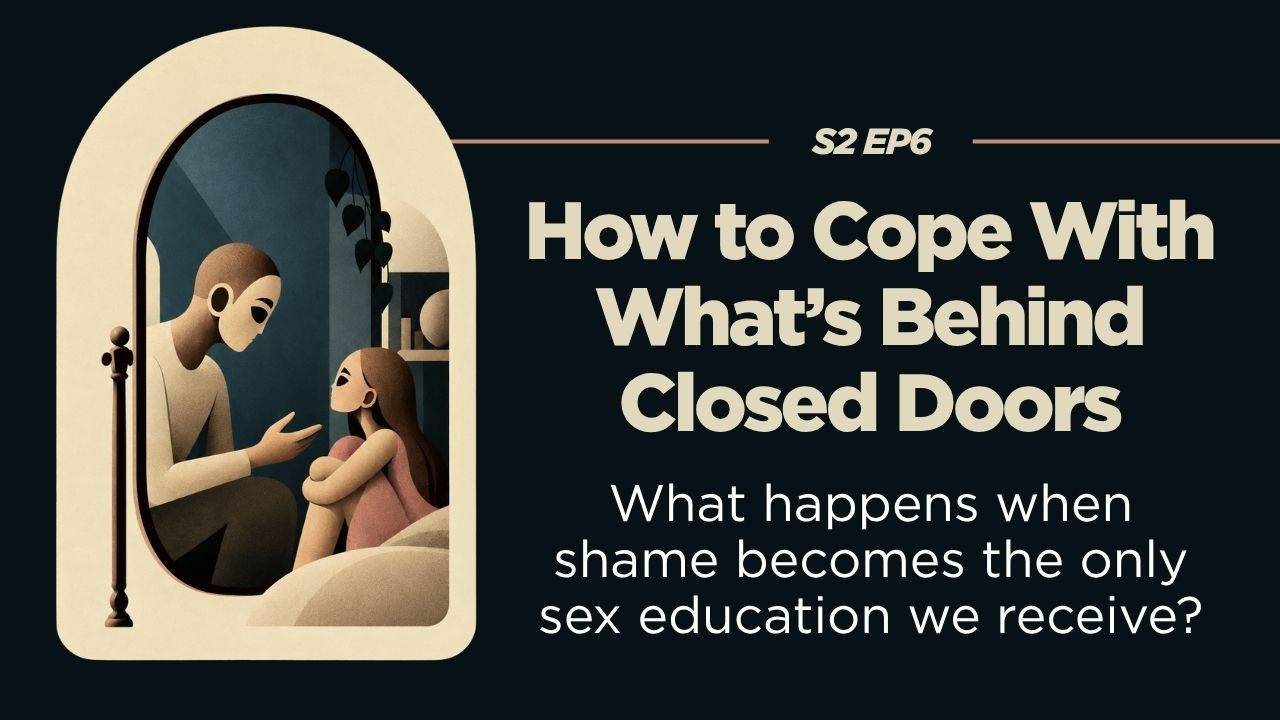
Podcast Companion Article for Love Your Villain – Season 2, Episode 6
What Silence Teaches
Most families do not decide to teach shame. Shame arrives more quietly: in the subject that makes everyone suddenly busy, the joke that turns a changing body into a punchline, the parent who says “not in this house” but never explains what is healthy, private, consensual, or safe.
In Season 2, Episode 6 of Love Your Villain, “How To Cope With What’s Behind Closed Doors”, I explore the parts of sexuality many adults learned to hide. We talk about masturbation, pornography, privacy, pleasure, partnership, puberty, and the awkward work of becoming the adult a child can actually ask about these things.
This is not me telling parents to tell their children everything. It is an invitation to stop making ordinary bodies and honest questions feel dangerous. Talking to kids about sex means giving them accurate, age-appropriate information, clear boundaries, and a steady place to return to when the world gives them confusing messages.
Sexual Shame Does Not Disappear at Marriage
One of the most persistent myths is that desire becomes simple once a person marries: attraction narrows to one partner, old habits vanish, and a wedding ring turns sexuality into something tidy. Real people are not that tidy. A person can love a partner deeply and still have a private erotic life, fantasies, questions, or a history shaped by religion, secrecy, and fear.
When adults have only learned two categories—pure or dirty—they often carry that split into partnership and parenting. They may hide what they want, monitor a partner’s desire, or panic when a child expresses normal curiosity. Shame does not create wisdom. It creates shadows.
The way out is not forced disclosure. It is curiosity: What did I learn about sex? Who benefited from my silence? What do I believe now? Which parts of my sexuality belong to me, which are shared with a consenting partner, and which conversations will help my children grow safely?
Curiosity Is Not Corruption
Children notice bodies. They ask where babies come from. They touch themselves. They hear words at school and see images online before many adults expect them to. Curiosity is not evidence that a child has become sexual in an adult sense. It is evidence that a child is learning about being human.
The American Academy of Pediatrics describes masturbation as a normal part of adolescent development and recommends teaching that it is private without making it shameful. Planned Parenthood similarly encourages parents to treat body and sexuality conversations as an ongoing process rather than one dramatic “talk.”
A calm response can be simple: “That is something people do in private.” “Your body belongs to you.” “You can always ask me questions.” We can name a boundary without attaching disgust to the body inside it.
Privacy Is a Boundary, Not a Punishment
Privacy is one of the most practical lessons in this episode. Adults are allowed to have a sex life. Children are entitled to protection from adult sexual material and activity. Both truths can live in the same home.
That means knocking before entering bedrooms, closing or locking doors when appropriate, storing sex toys and explicit material securely, and keeping adult content away from shared devices. It also means teaching children that some behaviours are private, not secret. Privacy protects dignity. Secrets demand silence and can make it harder for a child to disclose something unsafe.
The goal is not to build a house full of suspicion. It is to make the rules legible: everyone deserves bodily autonomy; nobody is entitled to another person’s private space; and adults are responsible for creating boundaries children can understand.
Porn Is Not Sex Education
If adults refuse to discuss sex, the internet will volunteer. Pornography can present bodies, pleasure, aggression, consent, and performance as if they are effortless facts. Young people may not yet have the context to recognize editing, acting, commercial pressure, or the difference between a fantasy negotiated by adults and behaviour that would be frightening or harmful in real life.
The answer is not only surveillance or panic. Young people need media literacy. We can explain that porn is made for entertainment, not instruction; that consent must be active and reversible; that real partners communicate; and that nobody owes a performance copied from a screen. We should also talk directly about sexting, image-sharing, permanence, coercion, and the right to refuse.
Consent Makes the Difference
Desire is not a moral failure. Fantasy is not the same as action. Kink is not automatically abuse. What matters between adults is informed, enthusiastic consent; negotiation; the ability to stop; respect for limits; and care after intensity.
Those ideas begin long before anyone is sexually active. We teach consent when we let a child decline a hug, stop tickling when they say stop, ask before sharing their photo, and refuse to make affection the price of politeness. Later, the vocabulary becomes more explicit, but the foundation is familiar: your body is yours, other people’s bodies are theirs, and “no” is not an insult.
One Conversation Will Never Be Enough
There is no single perfect speech that completes sex education. Children need many small, age-appropriate conversations because their questions and capacity change. A five-year-old may need correct names for body parts and a rule about private touch. A ten-year-old may need honest information about puberty. A teenager may need conversations about desire, contraception, consent, online pressure, and relationships.
The Canadian Paediatric Society advises starting early and having many discussions about sexual health, healthy relationships, and consent. UNESCO’s guidance likewise frames comprehensive sexuality education as age-appropriate, evidence-informed, and grounded in dignity, health, equality, and rights.
You do not have to deliver a lecture. Answer the question asked. Check what they already think. Admit when you do not know. Then come back with accurate information. Trust is built through return visits.
Fathers Belong in These Conversations Too
Fathers should not disappear when daughters begin menstruating or when any child asks about sex. Sending every question to Mom teaches that bodies are women’s work and that men are too embarrassed, uninformed, or unsafe to participate.
A father can learn the basics of periods, keep supplies in the house, talk about consent, and listen without making a daughter’s body weird. He can talk with sons about wet dreams, erections, masturbation, rejection, and respect without teasing them into silence. Children benefit when more than one trusted adult can speak clearly and calmly.
Competence matters more than having the same anatomy. The message is: I can handle this conversation, and I can handle you.
Periods, Wet Dreams, and Bodies That Change
Puberty is full of events that arrive before children feel ready. A first period can become a celebration, a practical lesson, a source of embarrassment, or all three. Wet dreams and masturbation can be treated as normal development or turned into family comedy at a child’s expense.
Prepare before the change. Keep supplies available. Explain what may happen. Include children of all genders in basic puberty education so nobody’s body becomes mysterious or disgusting. Humour can reduce tension, but it should never make the child the joke.
Let Children See Affection, Not Adult Sexuality
Children do not need access to their parents’ sexual activity. They can, however, benefit from seeing a relationship that contains warmth: affection, flirting that feels safe, apology, mutual respect, and the ordinary pleasure of adults enjoying one another’s company.
That visible tenderness offers a counterstory to both shame and performance. It shows that intimacy is not only an act behind a locked door. It is also kindness, boundaries, play, repair, and attention.
Becoming the Adult They Can Ask
Your child may roll their eyes. They may say they know everything. They may refuse the conversation today and return months later with a question that scares them. The purpose of talking to kids about sex is not to control every choice. It is to keep the bridge standing.
Be accurate. Be calm enough. Apologize if you react badly. Protect their privacy while acting when safety is at risk. Make room for values without pretending facts are optional. And remember: an awkward conversation is not a failed conversation.
What grows in darkness is not innocence, it is confusion. When we replace shame with language, boundaries, and connection, children are more likely to recognize what is healthy, name what is not, and seek help when they need it.
Reflection Questions
As you reflect on this episode, consider:
- What messages did your family or faith community give you about masturbation, pleasure, and desire?
- Were privacy and secrecy treated as the same thing in your home?
- How comfortable are you naming body parts and answering sexual-health questions without joking or shutting down?
- What does your child currently understand about consent, pornography, sexting, and digital permanence?
- Are all caregivers prepared to discuss puberty and sexual health, regardless of the child’s gender?
- What information or supplies could you provide before your child needs them?
- If your child told you something uncomfortable tomorrow, what response would keep the bridge open?
We cannot make every part of sexuality risk-free or simple. We can make home a place where bodies are not dirty, boundaries are real, pleasure is not a confession, and questions do not cost a child our love.
Listen to the Full Episode
In Season 2, Episode 6 of Love Your Villain, “How To Cope With What’s Behind Closed Doors,” I explore sexual shame, masturbation, porn, privacy, consent, puberty, parenting, and how adults can become safer sources of honest information for children.
Listen to Love Your Villain on Apple Podcasts or Spotify.
Further Exploration
If this conversation resonated with you, these resources offer practical guidance and age-appropriate ways to continue it.
Books
- It’s Not the Stork! — Robie H. Harris and Michael Emberley (ages 4–8)
- It’s So Amazing! — Robie H. Harris and Michael Emberley (ages 7–10)
- It’s Perfectly Normal — Robie H. Harris and Michael Emberley (age 10+)
Talking With Children About Sex
- How Do I Talk With My Elementary School-Aged Child About Sex? — Planned Parenthood
- What Should I Teach My Middle Schooler About Sex and Sexuality? — Planned Parenthood
- Birth Control for Teens — Canadian Paediatric Society
Puberty, Masturbation, and Privacy
- Masturbation — HealthyChildren.org
- Physical Development in Boys: What to Expect — HealthyChildren.org
- Sexual Behaviors in Young Children: What’s Normal, What’s Not? — HealthyChildren.org
Consent, Sexual Health, and Digital Safety
- Comprehensive Sexual Health Assessments for Adolescents — Canadian Paediatric Society
- International Technical Guidance on Sexuality Education — UNESCO
- The New Problem of Sexting — HealthyChildren.org
Topics
- Talking to kids about sex without shame
- Masturbation, puberty, and age-appropriate privacy
- Consent, pornography, and digital media literacy
- Fathers, daughters, sons, and shared parenting responsibility
Take The Love Your Villain Course
ILA’S STORY