
It Takes a Village: Postpartum Mental Health, Parental Isolation, and Community Care
Oct 19, 2026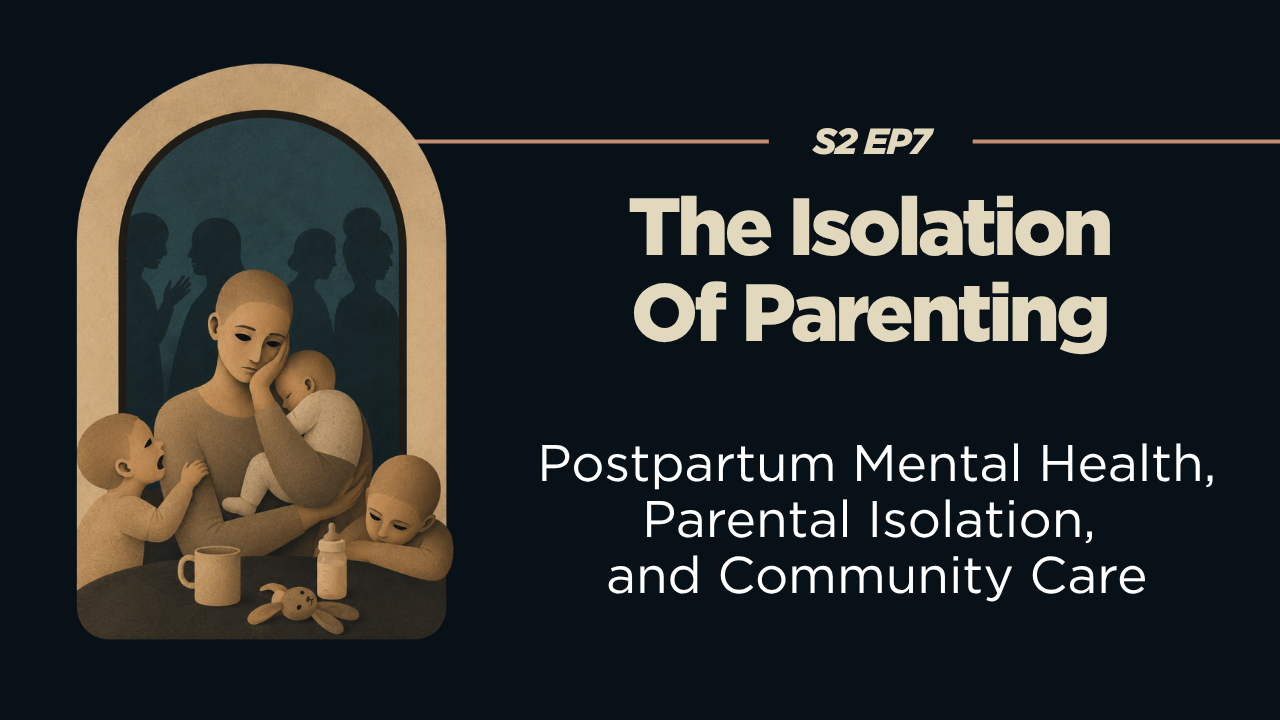
Podcast Companion Article for Love Your Villain – Season 2, Episode 7: “The Isolation of Parenting”
Parenting Was Never Meant to Be a Solo Performance
We love to say that it takes a village to raise a child. Then a baby arrives, the casseroles stop, parental leave ends, and many families discover that the village was mostly a slogan.
In Season 2, Episode 7: The Isolation of Parenting, on the Love Your Villain podcast, I ask what happens when parents (especially mothers) are left alone with physical recovery, hormonal change, grief, relentless crying, sleep deprivation, older children, relationship strain, and the expectation that they should still be grateful, competent, calm, and available.
This episode was prompted by a devastating case involving the deaths of children and public debate about a mother’s mental state. The tragedy is not a thought experiment. Children died, a family was destroyed, and accountability matters. But if our only response is disgust, we learn nothing about the conditions that can allow a struggling parent to disappear in plain sight.
Compassion is not the same as condoning harm. It is the willingness to look directly at suffering before it becomes a catastrophe—and to build postpartum depression support that does not depend on a person in crisis finding the perfect words to ask for it.
Compassion and Accountability Can Share the Same Room
When something unimaginable happens, people often rush toward one of two positions: condemn the person completely or explain away the harm. We do not have to choose either extreme.
We can grieve the children, name the violence, and insist on accountability. We can also ask what warning signs were missed, what care was available, whether the parent could speak honestly, and why families are expected to absorb overwhelming pressure behind closed doors.
Understanding does not erase responsibility. It gives us more chances to intervene before responsibility arrives in the form of a courtroom, an emergency room, or a funeral.
Postpartum Depression and Postpartum Psychosis Are Not the Same
It is important not to diagnose a stranger from headlines—or to use postpartum depression as a catch-all explanation for violence. Perinatal depression is a mood disorder that can occur during pregnancy or after birth. It may involve persistent sadness, hopelessness, anxiety, guilt, irritability, exhaustion, loss of interest, difficulty bonding, or thoughts of death. It is treatable.
Postpartum psychosis is different. It is rare and can involve delusions, hallucinations, mania, severe confusion, paranoia, or rapidly changing moods. It is a psychiatric emergency requiring immediate assessment and care. Depression and psychosis can overlap, but they are not interchangeable, and most people living with depression or other mental illness are not violent.
The National Institute of Mental Health provides an overview of perinatal depression, while the American College of Obstetricians and Gynecologists distinguishes among perinatal mental-health conditions. Accurate language matters because shame and misinformation can delay help.
Miscarriage, Infertility, and the Grief We Minimize
The transition into—or away from—parenthood holds many forms of grief. Miscarriage is not “nothing.” A pregnancy ends, hormones shift, an imagined future disappears, and some people begin to distrust the body they thought would carry them safely forward.
Infertility and involuntary childlessness carry grief too: the hope that time remains, the repeated waiting, the body’s limits, and the life someone expected but did not get to live. These losses do not need to compete with one another to deserve care.
When society only knows how to celebrate pregnancy and birth, people experiencing loss are asked to mourn quietly. Community care means making room for the story that did not end with a baby coming home.
Isolation Turns Strain Into Crisis
A newborn changes a family system. With a second or third child, attention divides again. An older child may grieve the loss of exclusive attention. A middle child may struggle to locate their place. Parents may feel guilty that no one is getting enough of them while they themselves receive almost nothing.
Add sleep deprivation, physical recovery, financial pressure, feeding challenges, relationship conflict, and limited childcare, and the problem is not simply that a parent needs a bath or a positive affirmation. The problem is that a human nervous system is being asked to do more than it can sustain.
Poor social support and stressful life events are recognized risk factors for postpartum depression. Support is not a luxury added after the “real” medical care. It is part of the health of the parent, the baby, and the whole family.
A Crying Baby Can Overwhelm a Nervous System
Crying is a baby’s language. It can also be one of the most distressing sounds a depleted adult hears, especially when every attempt to feed, change, hold, rock, or soothe seems to fail.
That does not make the baby manipulative or the parent monstrous. It means the situation needs safety, relief, and another pair of hands. The American Academy of Pediatrics advises overwhelmed caregivers to place the baby on their back in a safe sleep space, step away briefly, calm themselves, and ask someone for help.
“Stop crying or I’ll give you something to cry about” is often inherited by dysregulation. A generation that was punished for distress may struggle to stay present with a child’s distress. Breaking that cycle begins with recognizing the reaction before it becomes an action.
Build the Village Before You Need It
A village cannot be assembled efficiently at the exact moment someone is hallucinating, suicidal, furious, or too exhausted to think. Support should be planned during pregnancy and revisited after birth.
A practical postpartum plan might identify:
- Who can take the baby while a parent sleeps, showers, eats, or attends an appointment.
- Who will check in without expecting to be entertained.
- Who can care for older children, prepare meals, run errands, or manage laundry.
- Which health-care provider to contact if mood, sleep, anxiety, or intrusive thoughts change.
- Where local peer-support groups, counselling, and perinatal mental-health services are available.
- What signs mean the family should call emergency services rather than wait for the next appointment.
The village may include a partner, relatives, friends, neighbours, a doula, a faith community, a therapist, a family doctor, public-health services, or other parents. It does not have to look traditional. It does have to be real.
Ask Better Questions, and Stay for the Answer
“Let me know if you need anything” places the planning back on the person with the least capacity. Offer something concrete: “Can I bring dinner Tuesday?” “I can take the baby for an hour while you sleep.” “I’m going to the grocery store; send me your list.” “Do you want me to sit with you while we call your doctor?”
And ask questions that allow an honest answer:
- Are you getting any uninterrupted sleep?
- Are you frightened by your thoughts?
- Do you feel safe being alone with the baby?
- Have you thought about hurting yourself or anyone else?
Direct questions do not create dangerous thoughts. They can create an opening for truth.
Do not ask and then recoil. A parent may need to say something messy, frightening, or socially unacceptable. Listening is not the whole intervention, but it may be the moment that makes professional intervention possible.
Medication Is Care, Not Evidence of Failure
This episode challenges a system that waits until distress becomes unbearable. That criticism should never be turned into shame about treatment. Antidepressants and other medications can be appropriate, evidence-based, and lifesaving when prescribed and monitored by a qualified professional.
Community support cannot replace clinical care, and clinical care cannot repair every structural problem. Many people need both: medical assessment and practical relief; therapy and sleep; medication and someone who notices when they stop answering messages.
Emotional Literacy Is Community Care
Children do not only learn regulation from what adults tell them. They learn from what adults do with frustration, grief, fear, shame, and anger.
If we demand that children name their feelings while adults deny, suppress, blame, or explode, children become responsible for navigating emotions the grown-ups refuse to hold. Emotional literacy means noticing what is happening inside us, naming it without turning it into someone else’s fault, and choosing what we do next.
Sometimes that sounds like: “I am overwhelmed and need to step away.” “The baby is safe in the crib, and I am calling someone.” “I am having thoughts that frighten me.” “I need help today, not next week.” These are not confessions of bad character. They are acts of protection.
When It Is an Emergency
Thoughts of suicide, harming a baby or another person, hallucinations, delusions, severe confusion, paranoia, mania, or an inability to sleep for an extended period can require urgent help. Do not leave a person alone with a baby if immediate safety is uncertain. Call emergency services or go to the nearest emergency department.
In Canada, anyone thinking about suicide, or worried about someone they know, can call or text 9-8-8 at any time. In British Columbia, the Pacific Post Partum Support Society provides telephone and text support, support groups, education, and referrals. Its service is not a substitute for emergency care.
You do not have to wait until you are certain it is “bad enough.” If something feels frightening, escalating, or unlike the person you know, seek help.
Reflection Questions
As you reflect on this episode, consider:
- What did your family teach you about asking for help, crying, anger, and emotional distress?
- Who is in your practical village, and what can each person realistically offer?
- Do you know the difference between postpartum depression and postpartum psychosis?
- What signs would tell you that a loved one needs urgent professional help?
- When you offer support, do you make a concrete offer or leave the overwhelmed person to organize it?
- How does your body respond to prolonged crying, and what is your safety plan when you reach your limit?
- What grief—miscarriage, infertility, birth trauma, identity loss, or something else—has your community made difficult to name?
- How can you practise emotional literacy before asking a child to do the same?
We will not prevent every tragedy with a meal train, a phone call, or a better apology. But communities can reduce isolation, notice change, share the load, and make it safer to tell the truth. Raising children is not private work with private consequences. The way we support parents becomes part of the emotional world children inherit.
Listen to the Full Episode
In Season 2, Episode 7 of Love Your Villain, “The Isolation of Parenting,” I explore postpartum mental health, miscarriage, relentless crying, emotional literacy, intergenerational dysregulation, and our collective responsibility to intervene before pain becomes harmful.
Listen to Love Your Villain on Apple Podcasts or Spotify.
Further Exploration
If this conversation resonated with you, these resources offer clinical information, practical support, and compassionate next steps.
Books
- Good Moms Have Scary Thoughts — Karen Kleiman, illustrated by Molly McIntyre
- The Fourth Trimester — Kimberly Ann Johnson
- The Motherly Guide to Becoming Mama — Jill Koziol, Liz Tenety, and Diana Spalding
Perinatal Mental Health
- Mental Health During and After Pregnancy — Public Health Agency of Canada
- Perinatal Depression — National Institute of Mental Health
- Summary of Perinatal Mental Health Conditions — American College of Obstetricians and Gynecologists
- Postpartum Depression — HealthLink BC
Support for Parents
- Pacific Post Partum Support Society — Services and Support Groups
- Postpartum Support International — Get Help
- How to Cope With Crying and Caring for a New Baby — HealthyChildren.org
Crisis Support in Canada
- 9-8-8 Suicide Crisis Helpline — Call or text 9-8-8
- Mental Health Support: Get Help — Government of Canada
Topics
- Postpartum depression support and perinatal mental health
- Postpartum psychosis, urgent warning signs, and emergency care
- Parental isolation, community care, and practical support
- Crying, nervous-system overload, and safe caregiver breaks
- Miscarriage, infertility, grief, and emotional literacy
Take The Love Your Villain Course
ILA’S STORY