Parenting Is No F**king Joke: Why Raising Children Begins Long Before They're Born
Jul 23, 2026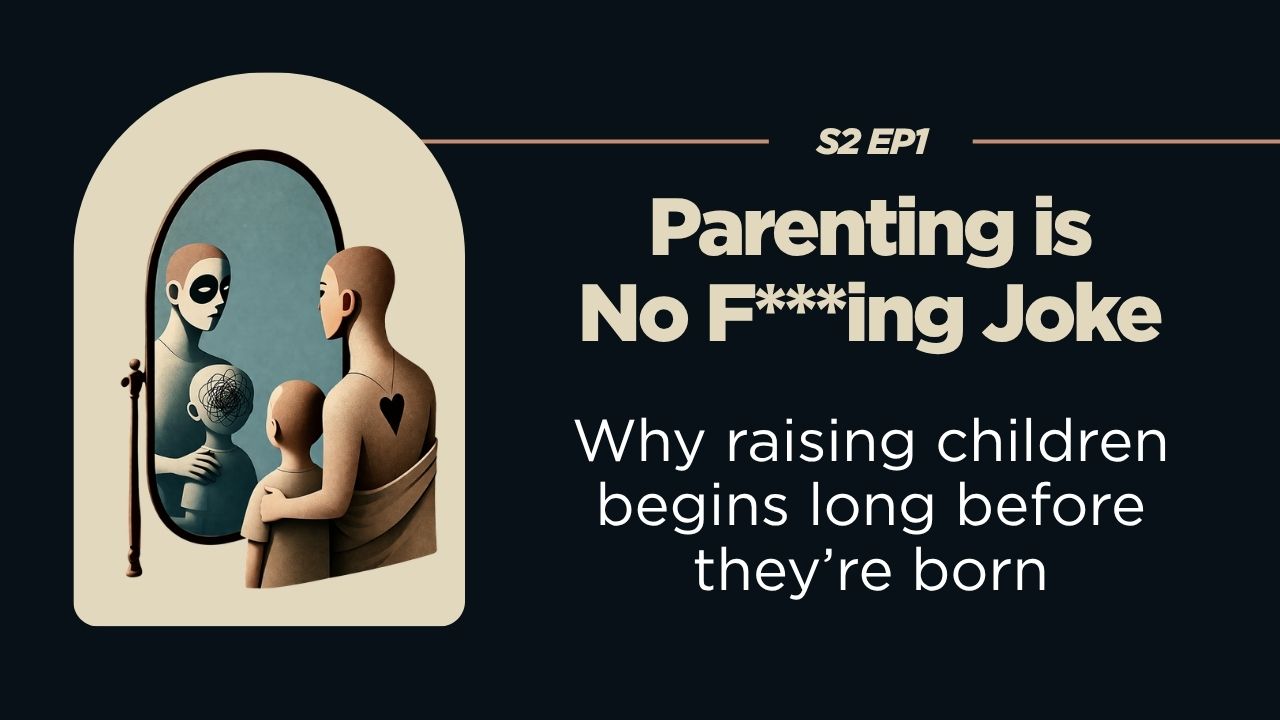
Podcast Companion Article for Love Your Villain – Season 2, Episode 1
Parenting Is More Than Raising a Child
We often think parenting begins the day a baby is born. But in reality, parenting starts much earlier.
It begins with the relationship we have with ourselves, the health of our nervous system, the strength of our relationships, and the emotional patterns we carry from our own childhood.
In the opening episode of Season 2 of Love Your Villain, I explore why parenting is one of the most important—and most underestimated—roles we'll ever take on.
Whether you're planning a family, expecting your first child, navigating postpartum, or simply reflecting on your own upbringing, this conversation isn't about becoming a perfect parent. It's about becoming a more conscious one.
Before There Is a Baby, There Is a Parent
One of the greatest misconceptions about parenting is that it begins once a child arrives. In reality, our capacity to parent begins long before pregnancy. The emotional regulation, communication skills, relationship dynamics, and beliefs we carry into parenthood don't suddenly change because a baby is born.
In many ways, becoming a parent magnifies what's already there.
If your relationship felt disconnected before pregnancy, those cracks often become more visible afterward. And if stress already feels overwhelming, sleep deprivation and constant caregiving may amplify it.
Parenthood doesn't create these challenges. It reveals them.
The Invisible Work of Pregnancy
Pregnancy is often celebrated, but not always understood. Behind every growing baby is a body undergoing extraordinary physical and emotional change.
Throughout pregnancy, a woman's body is constantly adapting:
- Hormonal changes
- Fatigue
- Morning sickness
- Ligament and pelvic changes
- Sleep disruption
- Emotional shifts
- Preparing for birth while still managing everyday life
Many women continue working while their bodies are quietly directing enormous amounts of energy toward creating another human being. It's an incredible physiological achievement that often goes unseen.
Rather than expecting mothers to simply "push through," perhaps it's time we recognized pregnancy as one of the most demanding transitions the body can experience.
Learn about one mother’s journey through Matrescence and the transition to motherhood.
The Nervous System Doesn't Reset When a Baby Arrives
One of the recurring themes throughout Love Your Villain is nervous system regulation. Many parents assume they'll somehow become calmer, more patient, or more emotionally resilient once the baby arrives.
But our nervous systems don't work that way. Babies don't create stress. They reveal how much stress we're already carrying.
Sleep deprivation, relentless crying, physical recovery, and constant responsibility can expose unresolved anxiety, emotional overwhelm, or relationship tension that may have existed long before parenthood.
Understanding this isn't about blame It's about awareness. When we recognize our own nervous system patterns, we become better equipped to care for ourselves, and, in turn, our children.
Learn more about Nervous System Regulation and tools for stress, burnout and overwhelm here
Babies Are Constantly Learning From Us
Long before children understand language, they're learning from the emotional environment around them.
They notice:
- Tone of voice
- Facial expressions
- Tension between caregivers
- Calmness
- Safety
- Connection
Children aren't simply listening to what we say. They're experiencing how we move through the world.
This is why emotional regulation isn't just self-care. It's parenting.
Every moment we model repair, compassion, accountability, or healthy boundaries, we're teaching lessons that words alone can't communicate.
Learn about the social/emotional developmental stages of infants and toddlers
Parenting Doesn't Require Perfection
Many parents carry an impossible expectation:
"Don't mess your child up."
But the truth is, every parent will make mistakes.
The goal isn't perfection, it's repair. Children don't need flawless parents. They need caregivers who can:
- Reflect on their behaviour
- Take responsibility when they make mistakes
- Apologize sincerely
- Continue learning
Emotional maturity isn't never getting it wrong. It's being willing to grow when you do.
Why Support Matters More Than We Admit
Modern parenting can be incredibly isolating. Many parents are expected to recover physically, regulate emotionally, maintain relationships, continue working, and care for an entirely dependent human, all while pretending they're coping.
No one was meant to do this alone. Seeking help isn't a weakness.
Whether it's:
- Family support
- Counselling
- Osteopathic care
- Pelvic floor therapy
- Lactation consultants
- Friends who simply listen
Support allows parents to care for themselves so they can better care for their children. Looking after yourself isn't taking away from your family. It's one of the greatest gifts you can give them.
Finding family social support depends on where you are living. Here in British Columbia you can start by visiting the BC Government website for family social support.
Parenting Is a Community Responsibility
One idea explored throughout this episode is that raising emotionally healthy children isn't solely the responsibility of individual families. It's something communities influence together.
When we judge overwhelmed parents in grocery stores, restaurants, or parks, we reinforce shame. When we offer patience, kindness, or understanding instead, we create safer environments for everyone.
Children don't grow up in isolation, and neither do parents.
Reflection Questions
As you reflect on this episode, consider:
- What messages did you receive about emotions growing up?
- How did the adults in your life respond when you cried?
- What parts of your own childhood would you hope to repeat?
- What patterns would you hope to change?
- How do you care for your own nervous system during stressful seasons of life?
Sometimes healing doesn't begin when we become parents. Sometimes it begins when we become curious about the child we once were.
Listen to the Full Episode
Season 2 of Love Your Villain explores parenting through a different lens—not by offering perfect parenting advice, but by inviting honest conversations about the emotional realities so many families experience behind closed doors.
In Episode 1, we explore:
- Why parenting begins before birth
- The hidden emotional labour of pregnancy
- Nervous system regulation and emotional resilience
- Why support is essential—not optional
- How our own childhood shapes the parents we become
Listen to Episode 1 of Season 2: *Parenting Is No Fking Joke* wherever you get your podcasts.
Further Exploration
If this conversation resonated with you, you may enjoy learning more about:
Books
- The Whole-Brain Child — Daniel J. Siegel & Tina Payne Bryson
- Parenting from the Inside Out — Daniel J. Siegel & Mary Hartzell
- The Body Keeps the Score — Bessel van der Kolk
- Hold On to Your Kids — Gordon Neufeld & Gabor Maté
Topics
- Attachment Theory
- Nervous System Regulation
- Polyvagal Theory
- Matrescence (the transition into motherhood)
- Infant Emotional Development
Related Love Your Villain Content
ILA’S STORY